Deep partial lunar eclipse to turn Moon red across Americas and Europe
On Thursday night into Friday, up to 96% of the Moon will pass through Earth's shadow, creating a Blood Moon visible across North and South America.
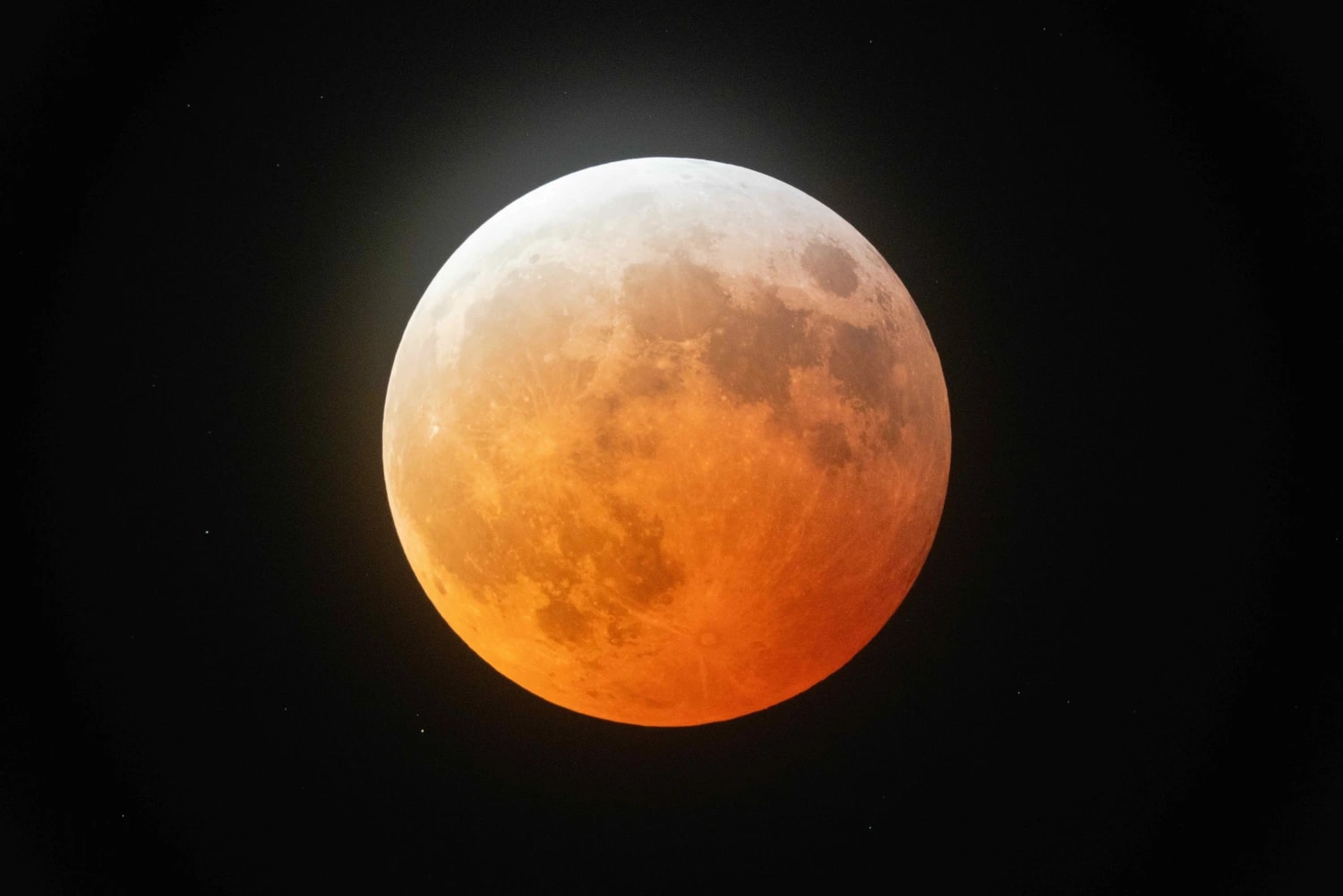
A deep partial lunar eclipse will occur on the night of August 27 into the early morning of August 28, 2026, visible across North and South America, Europe, and Africa. According to NASA, at the moment of greatest eclipse, 96.3% of the Moon's disk will be within Earth's umbra, the central part of the shadow where the Sun is completely blocked by Earth. The eclipse begins at 9:23 p.m. EDT on August 27, when the partial phase starts and Earth's shadow begins to cover the Moon, according to Space.com.
The maximum eclipse occurs at 12:12 a.m. EDT on August 28, as reported by TODAY.com. During this peak, the Moon will appear reddish or coppery due to sunlight filtering through Earth's atmosphere. Unlike a total lunar eclipse, the Moon will not be entirely covered by the umbra.
Space.com notes that about 96% of the Moon will pass into Earth's shadow, leaving a thin sliver of the lunar surface still illuminated. This makes it a deep partial eclipse, not a true "blood moon" in the strictest sense, though the reddish color will be dramatic. The eclipse will be visible from the Americas, with all 50 U.S. states able to see it, according to NASA via TODAY.com.
The best views will be from North and South America, where the Moon will be high in the sky during the peak phases. In Europe, the eclipse occurs early on Friday morning, but the Moon will set during the partial phase, limiting visibility. No special equipment is needed to view the eclipse; it is safe to look directly at the Moon.
Clear skies are essential, and viewers should seek an unobstructed view toward the west or southwest, depending on location. The eclipse is part of Saros series 138, with the previous eclipse in the series occurring on August 16, 2008, and the next on September 7, 2044, according to NASA. This is the first deep partial lunar eclipse since September 18, 2024, and the most impressive lunar eclipse until a total lunar eclipse on December 31, 2028, Space.com reports.
The BBC reports that in the UK, cloud and rain may obscure the view, with the best chances in eastern and south-eastern England, western Scotland, and Northern Ireland. In the U.S., western states, northern Chile, and inland Brazil statistically offer the best odds of clear skies, according to Space.com. I think they [Blood Moons] have a certain sort of magical feeling about them.
 NASA
NASA Science
About this story +
Research and drafting assisted by iFANN Intelligence
- How to see the 'Blood Moon' lunar eclipse: BBC Science & Environment
- How to watch the partial lunar eclipse from Northern Ireland: BBC Science & Environment
- How can you see Friday's 'Magical' Blood Moon?: BBC Science & Environment
- Moon set to turn red as rare partial lunar eclipse graces UK skies on Friday: BBC Science & Environment
- A near-total lunar eclipse nicknamed the Blood Moon will be visible across North & South America tonight. https://t.co/xI9HKfBeBy: Pop Crave (X)
- space.com
- today.com
- svs.gsfc.nasa.gov
- nhm.ac.uk
- A deep partial lunar eclipse will occur on the night of August 27 into the early morning of August 28, 2026, visible across North and South America, Europe, and Africa.confirmed
- According to NASA, at the moment of greatest eclipse, 96.3% of the Moon's disk will be within Earth's umbra, the central part of the shadow where the Sun is completely blocked by Earth.confirmed
- The eclipse begins at 9:23 p.m. EDT on August 27, when the partial phase starts and Earth's shadow begins to cover the Moon, according to Space.com.confirmed
- The maximum eclipse occurs at 12:12 a.m. EDT on August 28, as reported by TODAY.com.confirmed
- During this peak, the Moon will appear reddish or coppery due to sunlight filtering through Earth's atmosphere.confirmed
- Unlike a total lunar eclipse, the Moon will not be entirely covered by the umbra.confirmed
- Space.com notes that about 96% of the Moon will pass into Earth's shadow, leaving a thin sliver of the lunar surface still illuminated.confirmed
- This makes it a deep partial eclipse, not a true "blood moon" in the strictest sense, though the reddish color will be dramatic.confirmed
- The eclipse will be visible from the Americas, with all 50 U.S. states able to see it, according to NASA via TODAY.com.confirmed
- The best views will be from North and South America, where the Moon will be high in the sky during the peak phases.confirmed
- In Europe, the eclipse occurs early on Friday morning, but the Moon will set during the partial phase, limiting visibility.confirmed
- No special equipment is needed to view the eclipse; it is safe to look directly at the Moon.confirmed
- Clear skies are essential, and viewers should seek an unobstructed view toward the west or southwest, depending on location.confirmed
- The eclipse is part of Saros series 138, with the previous eclipse in the series occurring on August 16, 2008, and the next on September 7, 2044, according to NASA.confirmed
- This is the first deep partial lunar eclipse since September 18, 2024, and the most impressive lunar eclipse until a total lunar eclipse on December 31, 2028, Space.com reports.confirmed
- The BBC reports that in the UK, cloud and rain may obscure the view, with the best chances in eastern and south-eastern England, western Scotland, and Northern Ireland.confirmed
- In the U.S., western states, northern Chile, and inland Brazil statistically offer the best odds of clear skies, according to Space.com.confirmed
- I think they [Blood Moons] have a certain sort of magical feeling about them.confirmed