Belgian physicist Francis Halzen wins 2026 Nobel Prize in Physics for IceCube neutrino observatory
The Royal Swedish Academy of Sciences cited his decisive contributions to the Antarctic observatory and the discovery of high-energy neutrinos of astrophysical origin.
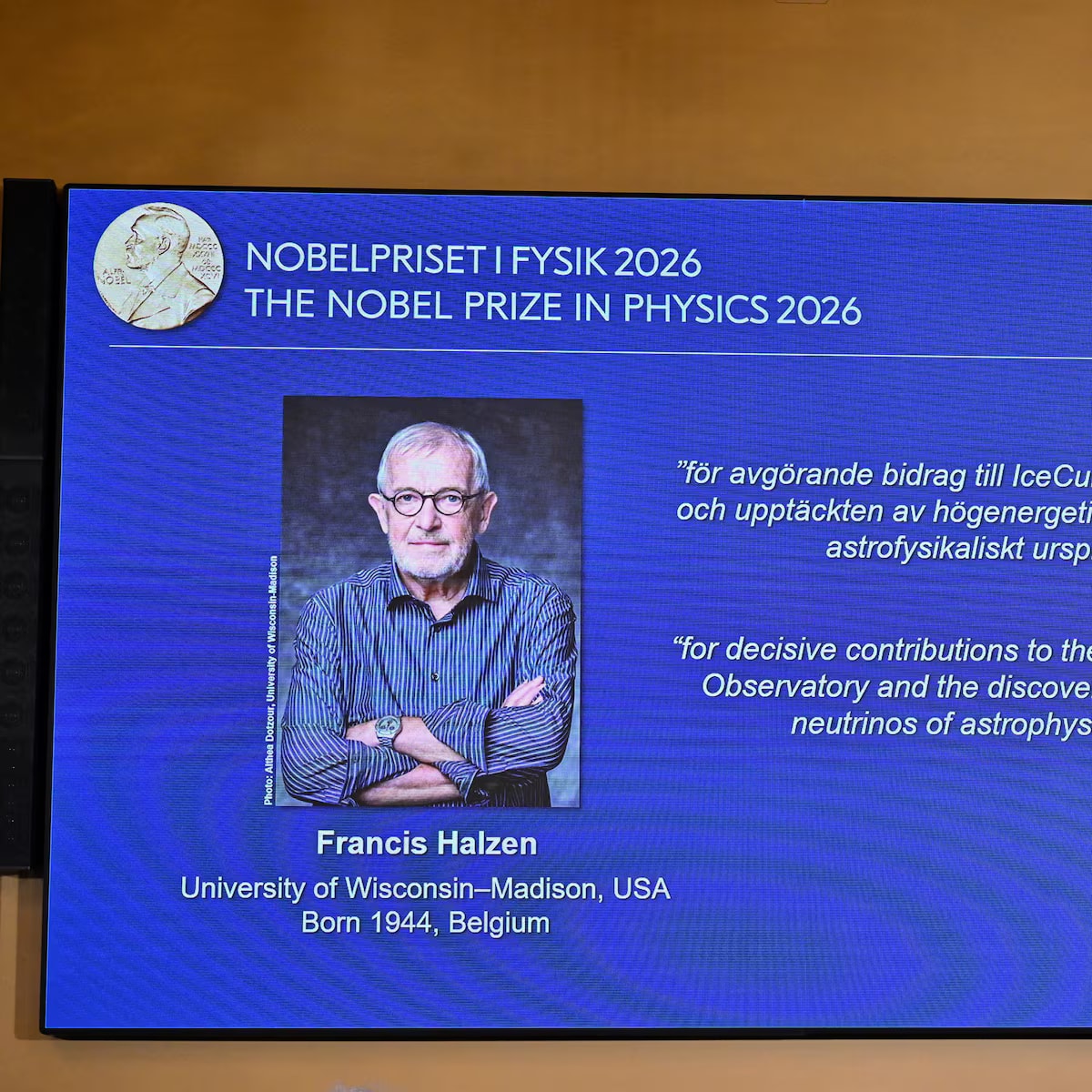
Francis Halzen, the Belgian-born physicist who turned a cubic kilometre of Antarctic ice into a telescope for ghostly particles, won the 2026 Nobel Prize in Physics on Tuesday. The Royal Swedish Academy of Sciences cited his "decisive contributions to the IceCube Neutrino Observatory and the discovery of high-energy neutrinos of astrophysical origin."
Halzen, 82, is a professor at the University of Wisconsin–Madison and principal investigator of the IceCube Neutrino Observatory at the South Pole. He first presented the idea of using clear glacial ice to detect neutrinos in 1988, when few colleagues thought the scheme would work.
“When we started this project, everybody realized this was maybe a good idea but very few thought it would work, including myself. So this was kind of an adventure where success wasn’t guaranteed.”
: Francis Halzen, speaking to the Nobel news conference by phone from Italy
Neutrinos are nearly massless subatomic particles that pass through matter almost undisturbed. Every second, billions from the Sun stream through a human body without effect. IceCube searches for a much rarer class: high-energy neutrinos produced by violent events far beyond the solar system, such as exploding stars or the regions around giant black holes.
The observatory embeds thousands of light sensors in a cubic kilometre of Antarctic ice. When a neutrino occasionally collides with an atomic nucleus, it produces a faint flash of blue light that the sensors record. The pattern and timing of that light allow scientists to reconstruct the neutrino's direction and energy, tracing it back to its cosmic source.
IceCube reached its full size in 2011, with 5,160 sensors on 86 cables. In 2013, the collaboration reported the first evidence of high-energy neutrinos from outside the solar system, and within a couple of years the discovery was confirmed. The Nobel committee said the observatory had opened a new kind of astronomy, providing information about phenomena hidden behind dust clouds or otherwise invisible to conventional telescopes.
“Francis Halzen has led an international team of researchers and engineers who have provided us with a fantastic instrument. His tenacity and scientific vision has paved the way for a new kind of astronomy.”
: Mark Pearce, Chair of the Nobel Committee for Physics
Halzen, who became a US citizen, told the news conference he was surprised the project worked so well. He said he hoped the prize would reflect on the researchers who joined the project early, when the outcome was far from certain. The award carries a prize of 12 million Swedish kronor, about £900,000. The ceremony will be held in Stockholm on December 10, the anniversary of Alfred Nobel's death.
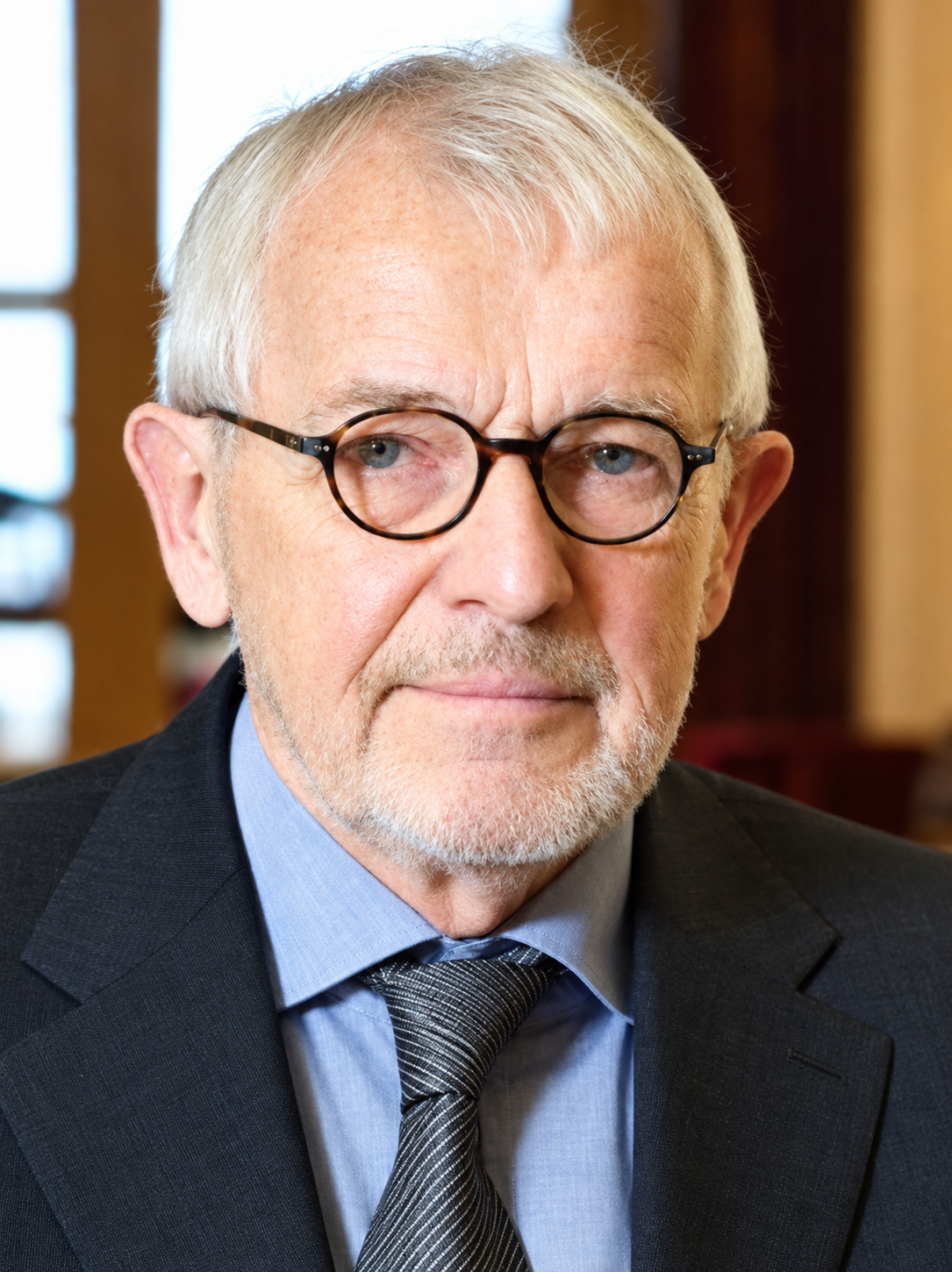 Francis Halzen
 Nobel Prize
 Science
About this story +
Research and drafting assisted by iFANN Intelligence
- Francis Halzen wins the Nobel Prize in physics for his contributions to the IceCube Neutrino Observatory and his discovery of high-energy neutrinos of astrophysical origin. https://t.co/WH9vW7Ch2O: AP (X)
- 'Ghost particles' from space telescope wins physics Nobel: BBC Science & Environment
- Nobel prize in physics awarded for Antarctic observatory that detects "ghost particles" from space https://t.co/HwEAty1GcU: BBC Breaking (X)
- Francis Halzen on winning Nobel Prize in Physics https://t.co/c4cocx60SE: Reuters (X)
- Nobel winner Francis Halzen said the prize 'was not a motivation,' speaking of his IceCube observatory, which uses Antarctic ice to track 'ghost particles' called neutrinos https://t.co/p4bMQLkPO1 htt: Reuters (X)
- scientificamerican.com
- nobelprize.org
- theguardian.com
- bbc.com
- cnn.com
- Francis Halzen, the Belgian-born physicist who turned a cubic kilometre of Antarctic ice into a telescope for ghostly particles, won the 2026 Nobel Prize in Physics on Tuesday.confirmed
- The Royal Swedish Academy of Sciences cited his "decisive contributions to the IceCube Neutrino Observatory and the discovery of high-energy neutrinos of astrophysical origin."confirmed
- Halzen, 82, is a professor at the University of Wisconsin–Madison and principal investigator of the IceCube Neutrino Observatory at the South Pole.confirmed
- He first presented the idea of using clear glacial ice to detect neutrinos in 1988, when few colleagues thought the scheme would work.confirmed
- "When we started this project, everybody realized this was maybe a good idea but very few thought it would work, including myself. So this was kind of an adventure where success wasn’t guaranteed."confirmed
- Neutrinos are nearly massless subatomic particles that pass through matter almost undisturbed.confirmed
- Every second, billions from the Sun stream through a human body without effect.confirmed
- IceCube searches for a much rarer class: high-energy neutrinos produced by violent events far beyond the solar system, such as exploding stars or the regions around giant black holes.confirmed
- The observatory embeds thousands of light sensors in a cubic kilometre of Antarctic ice.confirmed
- When a neutrino occasionally collides with an atomic nucleus, it produces a faint flash of blue light that the sensors record.confirmed
- The pattern and timing of that light allow scientists to reconstruct the neutrino's direction and energy, tracing it back to its cosmic source.confirmed
- IceCube reached its full size in 2011, with 5,160 sensors on 86 cables.confirmed
- In 2013, the collaboration reported the first evidence of high-energy neutrinos from outside the solar system, and within a couple of years the discovery was confirmed.confirmed
- The Nobel committee said the observatory had opened a new kind of astronomy, providing information about phenomena hidden behind dust clouds or otherwise invisible to conventional telescopes.confirmed
- "Francis Halzen has led an international team of researchers and engineers who have provided us with a fantastic instrument. His tenacity and scientific vision has paved the way for a new kind of astronomy."confirmed
- Halzen, who became a US citizen, told the news conference he was surprised the project worked so well.confirmed
- He said he hoped the prize would reflect on the researchers who joined the project early, when the outcome was far from certain.confirmed
- The award carries a prize of 12 million Swedish kronor, about £900,000.confirmed
- The ceremony will be held in Stockholm on December 10, the anniversary of Alfred Nobel's death.confirmed