Abandoned SpaceX Falcon 9 upper stage set to crash into the Moon on 5 August
The spent rocket stage, adrift since a January 2025 lunar mission, will hit the lunar surface at 5,400 mph, offering scientists a rare chance to study an artificial impact in real time.
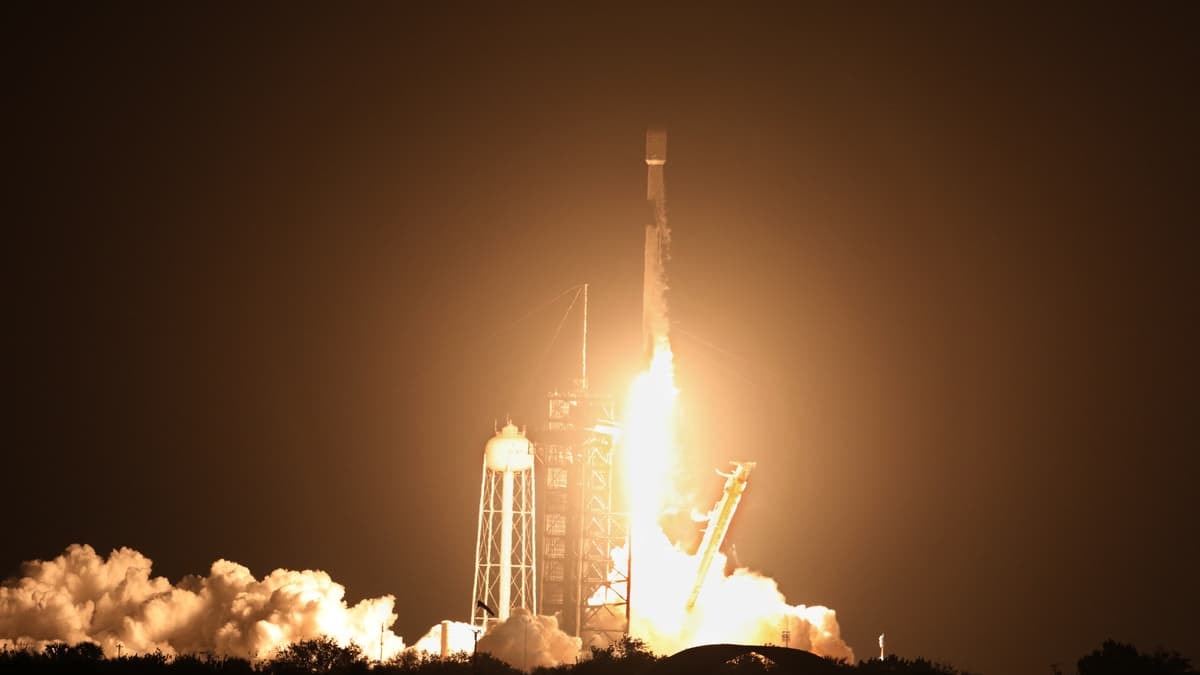
The impact, near the Einstein Crater on the lunar near side, is expected to excavate a crater 20–30 metres across and launch a debris plume tens of kilometres above the surface. The rocket stage, catalogued as 2025-010D, has been drifting since it helped launch two commercial lunar landers in January 2025. After deploying the Firefly Aerospace Blue Ghost lander and the Japanese ispace Resilience lander, the upper stage lacked the fuel to return to Earth or escape into deep space, remaining in an unstable orbit that gradually brought it onto a collision course with the Moon.
Astronomer Bill Gray, who first predicted the impact using public tracking data and his Project Pluto software, estimates the object will strike at about 2.43 kilometres per second (5,400 mph). According to a new study led by Benjamin Fernando of Los Alamos National Laboratory and published on the arXiv preprint server, the impact flash and resulting ejecta plume are “potentially observable” from ground- and space-based telescopes. The team calls on both professional and amateur astronomers to record the event, which will help calibrate models of lunar impacts and dust dynamics.
Jo’s simulations suggest the central ejecta spike could reach 75 to 100 kilometres in altitude, and the plume may be several orders of magnitude brighter than the dark-sky background for the first few minutes after impact. NASA’s Lunar Reconnaissance Orbiter (LRO) will not be in position to witness the impact as it happens, but it will pass over the site about a week before and after the event, allowing comparison images of the new crater. South Korea’s Danuri probe and large telescopes in the Americas are also expected to observe the aftermath.
Dr Matt Bothwell, public astronomer at the University of Cambridge, said the event is a cautionary tale. The European Space Agency estimates there are about 54,000 objects larger than 10 cm in Earth orbit, and roughly 17,000 tonnes of material have been launched since 1957. The last dead rocket to strike the Moon was a Chinese Long March 3C upper stage in 2022.
Writing in The Conversation, legal scholars note that the 1967 Outer Space Treaty offers little practical guidance on lunar environmental protection. They propose a lunar registry and standardised notices to operators to prevent future accidents as commercial activity on the Moon increases. Observers with sufficiently sensitive telescopes may glimpse the plume silhouetted against the dark sky near the lunar limb, though the flash itself is unlikely to be visible to the naked eye.
Jo told Space.com, stressing that tracking the evolving plume is where the real science lies. On the Moon, where there is no atmosphere or weather, any marks left behind can persist for millennia.
 NASA
NASA Space
Space SpaceX
About this story +
Research and drafting assisted by iFANN Intelligence
- The impact, near the Einstein Crater on the lunar near side, is expected to excavate a crater 20–30 metres across and launch a debris plume tens of kilometres above the surface.confirmed
- The rocket stage, catalogued as 2025-010D, has been drifting since it helped launch two commercial lunar landers in January 2025.confirmed
- After deploying the Firefly Aerospace Blue Ghost lander and the Japanese ispace Resilience lander, the upper stage lacked the fuel to return to Earth or escape into deep space, remaining in an unstable orbit that gradually brought it onto a collision course with the Moon.confirmed
- Astronomer Bill Gray, who first predicted the impact using public tracking data and his Project Pluto software, estimates the object will strike at about 2.43 kilometres per second (5,400 mph).confirmed
- According to a new study led by Benjamin Fernando of Los Alamos National Laboratory and published on the arXiv preprint server, the impact flash and resulting ejecta plume are “potentially observable” from ground- and space-based telescopes.confirmed
- The team calls on both professional and amateur astronomers to record the event, which will help calibrate models of lunar impacts and dust dynamics.confirmed
- Jo’s simulations suggest the central ejecta spike could reach 75 to 100 kilometres in altitude, and the plume may be several orders of magnitude brighter than the dark-sky background for the first few minutes after impact.confirmed
- NASA’s Lunar Reconnaissance Orbiter (LRO) will not be in position to witness the impact as it happens, but it will pass over the site about a week before and after the event, allowing comparison images of the new crater.confirmed
- South Korea’s Danuri probe and large telescopes in the Americas are also expected to observe the aftermath.confirmed
- Dr Matt Bothwell, public astronomer at the University of Cambridge, said the event is a cautionary tale.confirmed
- The European Space Agency estimates there are about 54,000 objects larger than 10 cm in Earth orbit, and roughly 17,000 tonnes of material have been launched since 1957.confirmed
- The last dead rocket to strike the Moon was a Chinese Long March 3C upper stage in 2022.confirmed
- Writing in The Conversation, legal scholars note that the 1967 Outer Space Treaty offers little practical guidance on lunar environmental protection.confirmed
- They propose a lunar registry and standardised notices to operators to prevent future accidents as commercial activity on the Moon increases.confirmed
- Observers with sufficiently sensitive telescopes may glimpse the plume silhouetted against the dark sky near the lunar limb, though the flash itself is unlikely to be visible to the naked eye.confirmed
- Jo told Space.com, stressing that tracking the evolving plume is where the real science lies.confirmed
- On the Moon, where there is no atmosphere or weather, any marks left behind can persist for millennia.confirmed