Yayoi Kusama, Japanese artist who turned hallucinations into polka dots and pumpkins, dies at 97
The pioneering avant-garde artist, whose mirrored installations and obsessive patterns drew on lifelong hallucinations, died in Tokyo on August 14.
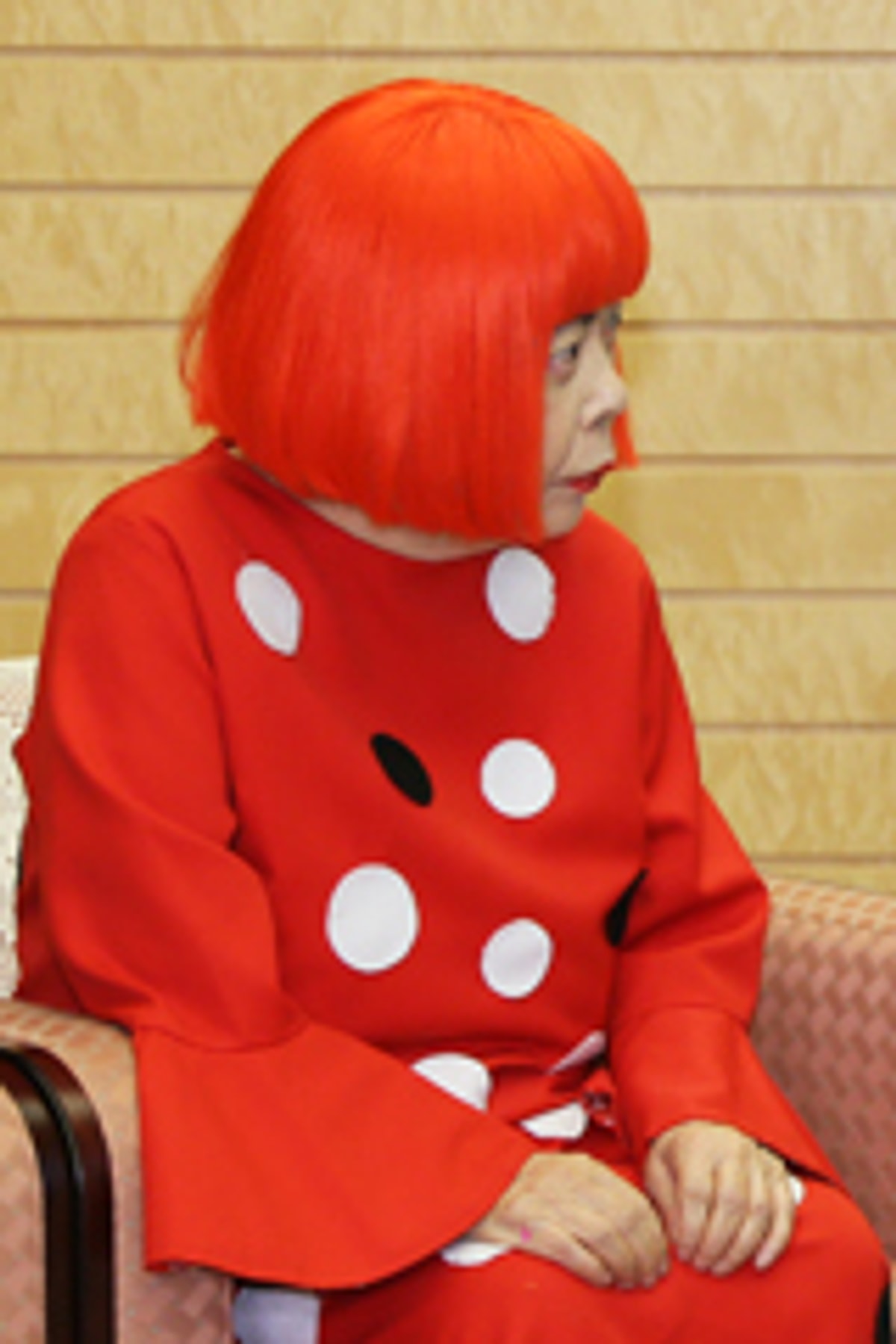
Yayoi Kusama, the Japanese artist whose polka dots, pumpkins and mirrored infinity rooms made her one of the most recognizable figures in contemporary art, has died in Tokyo at the age of 97. Her company, Yayoi Kusama Inc., announced on Thursday that she died in a hospital on August 14.
The statement described a career that spanned seven decades and encompassed painting, sculpture, performance, fiction and poetry. "Throughout an extraordinary lifetime devoted entirely to artistic creation, Kusama pursued an internationally acclaimed career as a pioneering avant garde artist," it said. "She continued to paint until her final days, never setting aside her brush."
Kusama was born in Matsumoto, Japan, in 1929 into a wealthy family that ran plant nurseries. Her childhood was marked by an abusive mother and a philandering father, and from around the age of ten she experienced hallucinations in which flowers and patterns would swarm, multiply and engulf her. Drawing what she saw became her coping mechanism, and those visions would define her art.
After studying traditional nihonga painting in Kyoto, Kusama left for New York in 1958. There she developed her "infinity net" paintings, vast fields of impastoed dots that stretched across canvases, and later her soft sculptures covered in fabric-stuffed phallic shapes, which she said were an attempt to heal her disgust around sex.
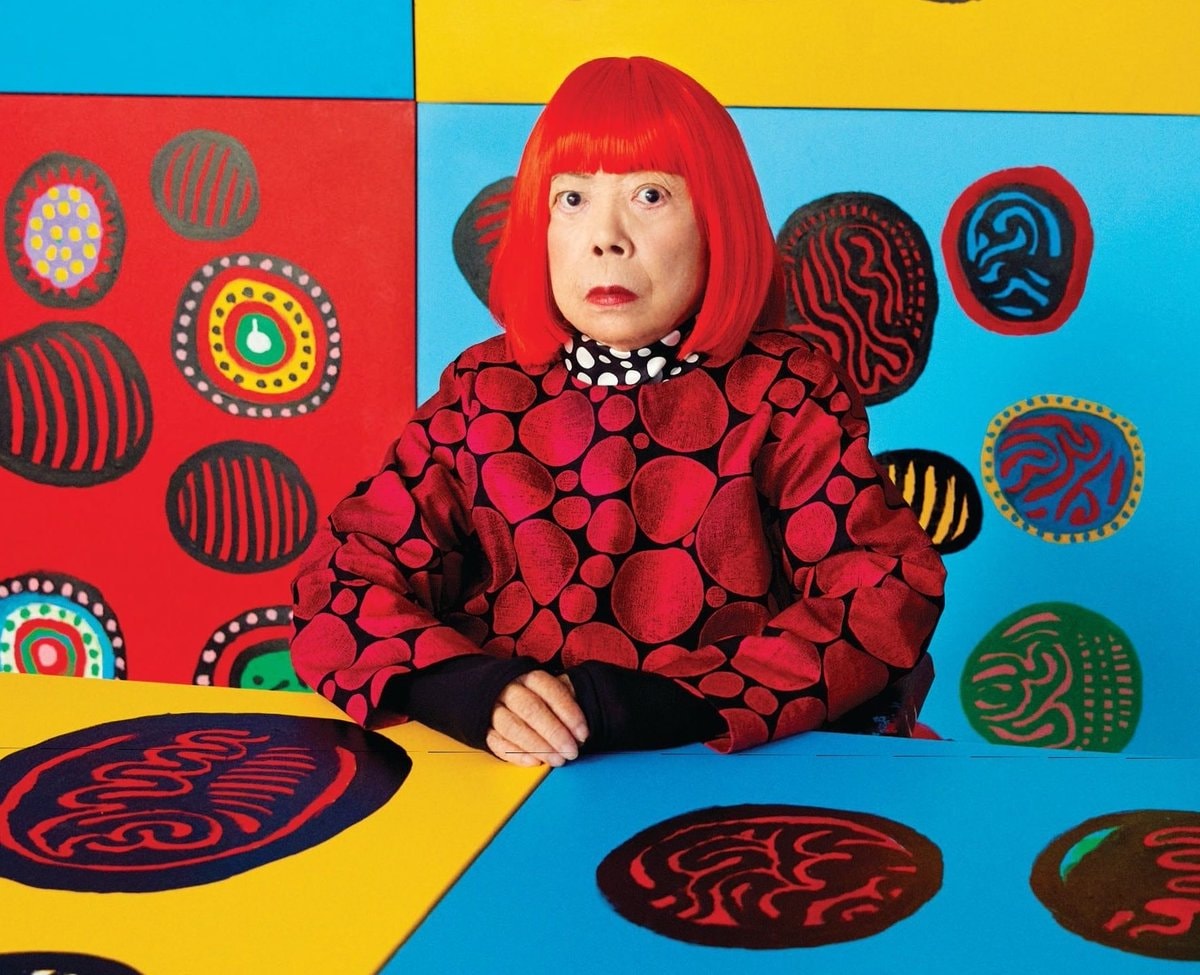
Her work often centered on the infinite and on "self-obliteration," a concept drawn directly from her hallucinations. In 1966 she staged Narcissus Garden at the Venice Biennale, a field of 1,500 reflective balls that she tried to sell for $2 each under the banner "Your narcissism for sale" until officials shut the operation down. Her happenings also included painting polka dots on naked performers and staging New York's first "homosexual wedding" in 1968.
Despite working loosely within pop art and minimalism, Kusama was not embraced by the art world in her early decades. She maintained that many of her ideas were appropriated by white male artists, including Andy Warhol. By the early 1990s interest in her work had waned, but recognition arrived later in life. In 1993 she represented Japan at the Venice Biennale with a mirrored room filled with small pumpkin sculptures.
Kusama had lived voluntarily in a psychiatric hospital in Tokyo since 1977, working each day in a nearby studio. Her immersive installations found an enormous audience in the era of the social media selfie; her 2024 exhibition in Australia was the most popular in that country's history. In 2014 her painting White No 28 sold for $7.1 million at auction, then a record for a living female artist.
 Art
Art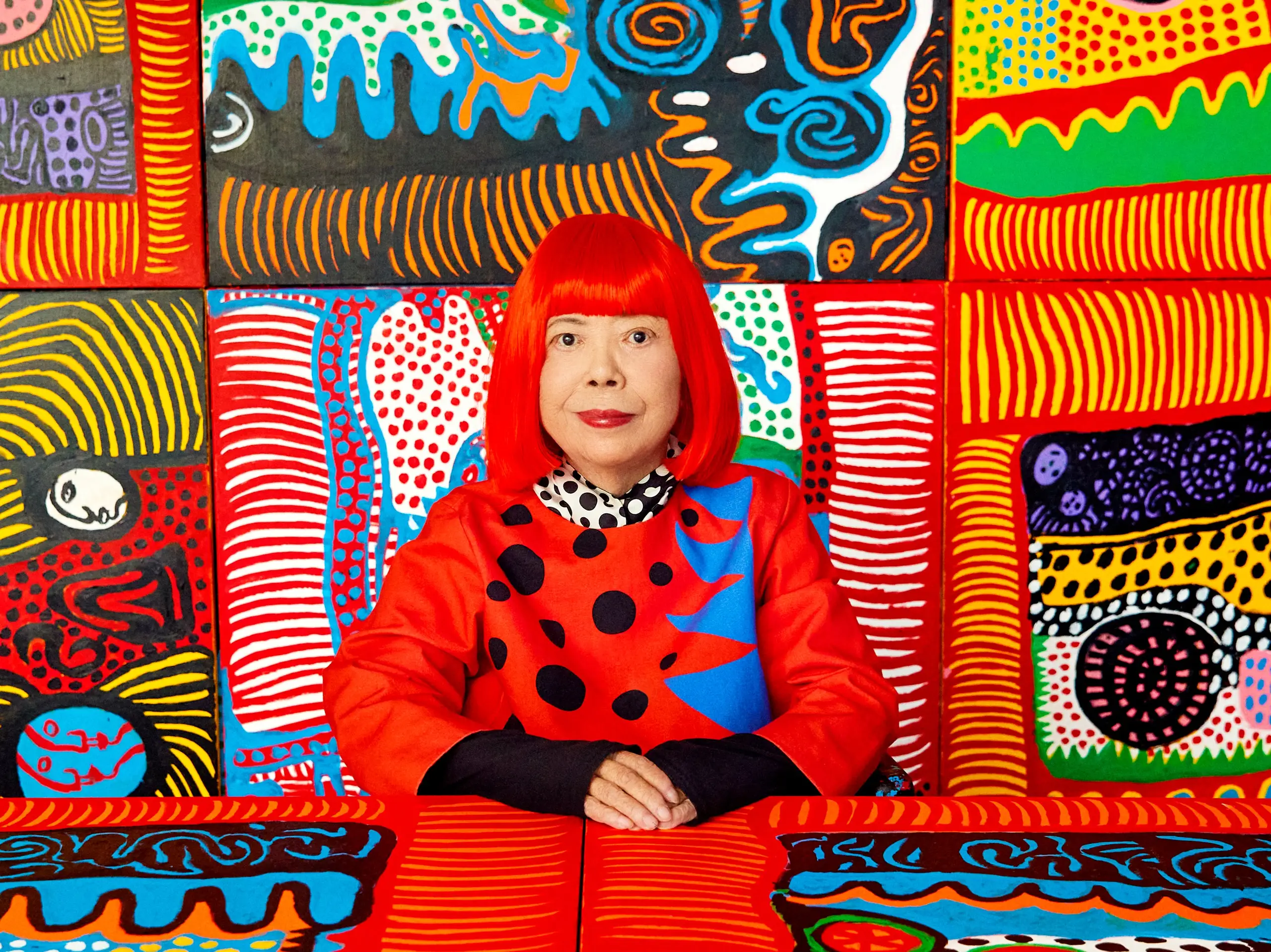 Yayoi Kusama
About this story +
Research and drafting assisted by iFANN Intelligence
- Yayoi Kusama, Japanese artist who became a global superstar, dies aged 97: The Guardian · Culturearchived
- Japanese avant-garde artist Yayoi Kusama, who transformed hallucinations into art and was known for her obsessive dot-covered paintings and pumpkin motifs, has died at the age of 97 https://t.co/hX3g: Reuters (X)
- Japanese artist Yayoi Kusama, who splashed her signature polka dots across the art world, dies at 97. https://t.co/pnMk63Dnnq: AP (X)
- Japanese artist Yayoi Kusama has died at the age of 97. https://t.co/ULV3220R8H: Pop Base (X)
- Japanese artist Yayoi Kusama has passed away at 97. https://t.co/KWIZcXfG8I: Pop Crave (X)
- Yayoi Kusama – a life in pictures: The Guardian · Fashion
- Yayoi Kusama, the acclaimed Japanese avant-garde artist who transformed her hallucinations into works that ranged from vibrant dot-covered paintings and pumpkin sculptures to infinity mirror room ins: Reuters (X)
- en.wikipedia.org
- dw.com
- phxart.org
- Yayoi Kusama, the Japanese artist whose polka dots, pumpkins and mirrored infinity rooms made her one of the most recognizable figures in contemporary art, has died in Tokyo at the age of 97.confirmed
- Her company, Yayoi Kusama Inc., announced on Thursday that she died in a hospital on August 14.confirmed
- The statement described a career that spanned seven decades and encompassed painting, sculpture, performance, fiction and poetry.confirmed
- "Throughout an extraordinary lifetime devoted entirely to artistic creation, Kusama pursued an internationally acclaimed career as a pioneering avant garde artist," it said.confirmed
- "She continued to paint until her final days, never setting aside her brush."confirmed
- Kusama was born in Matsumoto, Japan, in 1929 into a wealthy family that ran plant nurseries.confirmed
- Her childhood was marked by an abusive mother and a philandering father, and from around the age of ten she experienced hallucinations in which flowers and patterns would swarm, multiply and engulf her.confirmed
- Drawing what she saw became her coping mechanism, and those visions would define her art.confirmed
- After studying traditional nihonga painting in Kyoto, Kusama left for New York in 1958.confirmed
- There she developed her "infinity net" paintings, vast fields of impastoed dots that stretched across canvases, and later her soft sculptures covered in fabric-stuffed phallic shapes, which she said were an attempt to heal her disgust around sex.confirmed
- Her work often centered on the infinite and on "self-obliteration," a concept drawn directly from her hallucinations.confirmed
- In 1966 she staged Narcissus Garden at the Venice Biennale, a field of 1,500 reflective balls that she tried to sell for $2 each under the banner "Your narcissism for sale" until officials shut the operation down.confirmed
- Her happenings also included painting polka dots on naked performers and staging New York's first "homosexual wedding" in 1968.confirmed
- Despite working loosely within pop art and minimalism, Kusama was not embraced by the art world in her early decades.confirmed
- She maintained that many of her ideas were appropriated by white male artists, including Andy Warhol.confirmed
- By the early 1990s interest in her work had waned, but recognition arrived later in life.confirmed
- In 1993 she represented Japan at the Venice Biennale with a mirrored room filled with small pumpkin sculptures.confirmed
- Kusama had lived voluntarily in a psychiatric hospital in Tokyo since 1977, working each day in a nearby studio.confirmed
- Her immersive installations found an enormous audience in the era of the social media selfie; her 2024 exhibition in Australia was the most popular in that country's history.confirmed
- In 2014 her painting White No 28 sold for $7.1 million at auction, then a record for a living female artist.confirmed